
Sex Offender Checks in Linn County
A useful Linn County sex offender check starts with a place, a name, or both. The Linn County Sheriff Offenders page is the local layer. The county’s chief law-enforcement official maintains registration information and accepts local updates. The Missouri Sex Offender Registry is the statewide layer managed by the Missouri State Highway Patrol Criminal Justice Information Services Division. It supports broader search controls and draws together qualifying registration records from Missouri counties.
Start with the Linn County layer when the question is tightly local. Use the Missouri registry to search true names and aliases, filter by county, or draw a radius around a street address. The national search becomes useful when a move or other address history crosses a state border. Keep the person’s full name, an exact birth date if known, and the correct street or city close at hand. Similar names can lead to the wrong profile, while an address-only search can miss a person tied to a different registered address category.
Linn County’s Two Registry Layers
The local and statewide results should be read together, not treated as rival lists. Linn County maintains information supplied through registration with the sheriff. MSHP says its public website supplements local registries and does not amount to a complete criminal history. The state layer provides uniform search tools, while the Linn County layer keeps the search tied to the office responsible for county registration questions and suspected noncompliance.
The official Linn County offenders source shows how the sheriff presents the local registry channel.
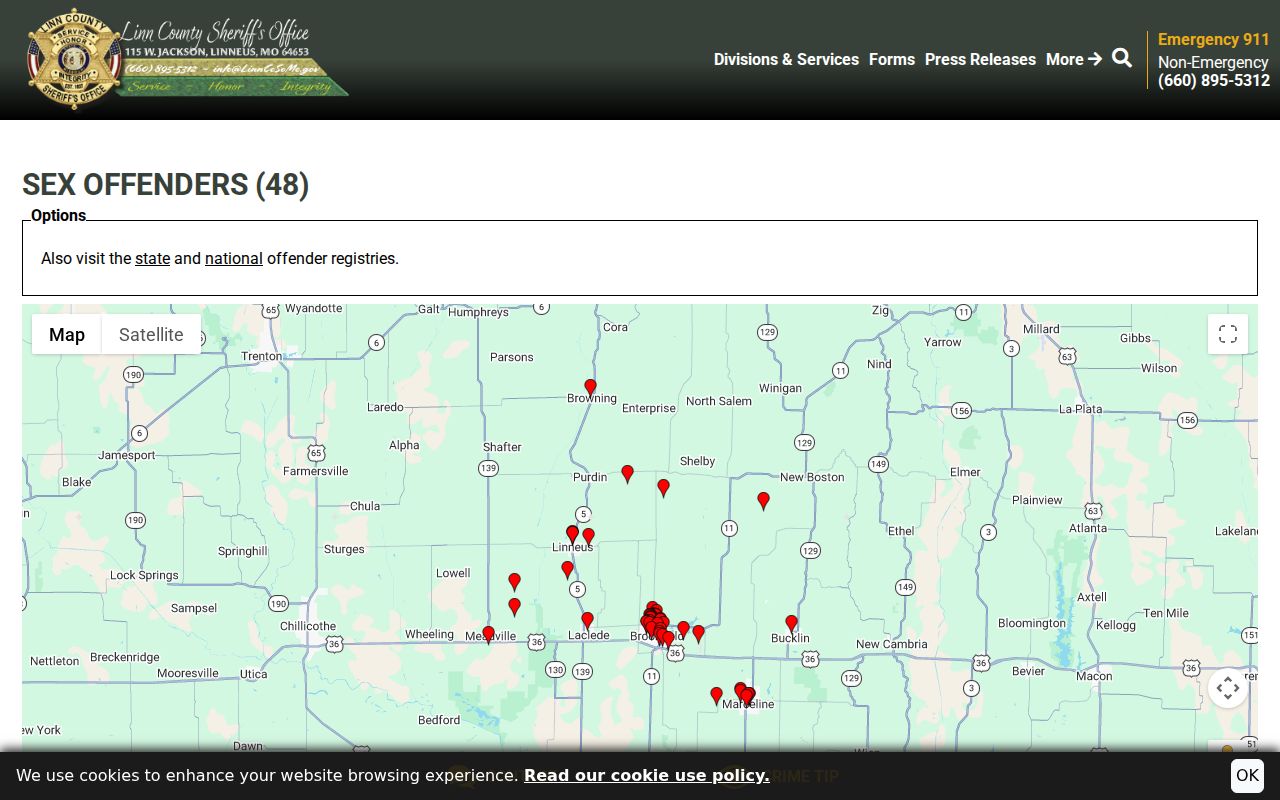
This county view is the practical first stop for a Linn County address, but a statewide search still helps when an alias, work location, school location, or move broadens the question.
A missing local result proves little. Search statewide by name, check the profile’s registration agency and county, and contact that office. Call 911 for an immediate threat.
How to Search the Missouri Sex Offender Registry
MSHP offers two practical routes for Linn County registry research. A name or list search can use a person’s name, date of birth, tier, address type, city, county, state, or ZIP code. Radius mode looks for registrants who live, work, or attend school within the distance selected around a street address. At least one criterion is required. The state says its name search checks both true and alias names, which is useful when a Linn County record uses a former or alternate name.
- Open the official Missouri registry and review its conditions and accuracy notice before entering search terms.
- Choose name/list mode or radius mode. Select Linn County for a county list, or enter the most exact name, date, or address available.
- Compare the returned name, photograph, birth information, physical description, and registered location. Do not rely on a name alone.
- Open the full profile. Read the offense, jurisdiction, tier, compliance status, registered address types, and update information in context.
| Field Label | Type | Required | Notes |
|---|---|---|---|
| Last and first name | Text | One criterion | True and alias names are searched |
| Date of birth | Month, day, year | Optional | Exact date helps separate similar names |
| Predator and tier | Dropdowns | Optional | Filters by offered classification |
| Address type and street | Dropdown and text | Optional | May include incarcerated or moved-out-of-state choices |
| City, county, state, ZIP | Text and dropdowns | Optional | Select Linn for the county view |
| Street and distance | Text and dropdown | Radius mode | Finds registered home, work, or school ties nearby |
Broaden a zero-result search one field at a time. Remove the first name, try a known alias, or search the address radius. A county filter is useful, but it should not override what is known about the actual location.
Linn County Registry Registration Office
The Linn County Sheriff’s Office handles local registration at 115 W. Jackson Street in Linneus. Public office hours are Monday through Friday, 8:30 a.m. to 4 p.m., and the 24-hour non-emergency number is 660-895-5312. A person who must register or report a change should consult the sheriff’s registration procedure and call or book before arriving. Registration events can require an in-person appearance and details about residence, work or school location, vehicles, online identifiers, and travel, depending on the statute.
The county’s official registration page documents the local process and is the best source for current arrival instructions.
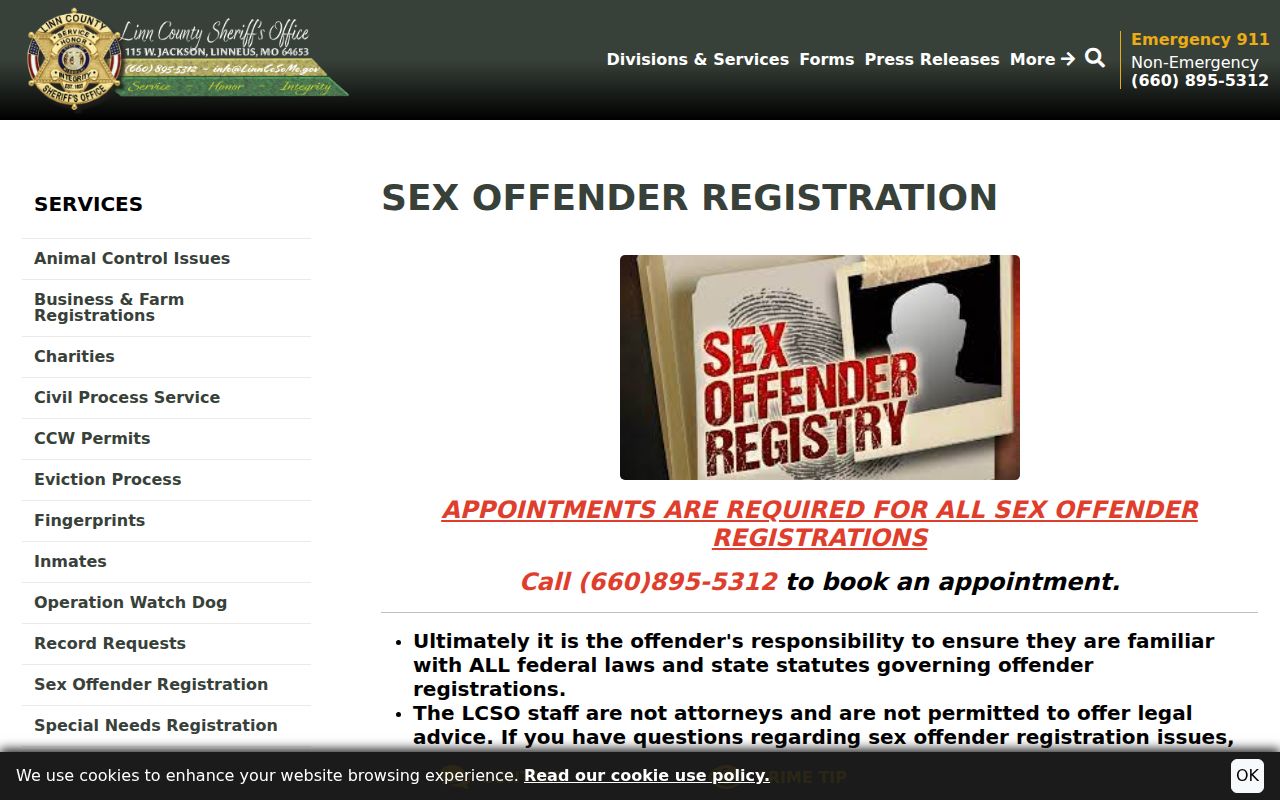
This local procedure matters to public searchers because the sheriff is also the right office for questions about a Linn County registration entry or a suspected missed update.
MSHP uses “compliant” for completed registration duties and “non-compliant” for a missed required item or update. Neither status grades present danger. Report concerns to the sheriff or MSHP, and never confront the person listed.
Inside a Registry Profile
A Missouri registry profile combines identity, registration, location, and qualifying-offense fields. Some fields appear only when they are legally public and populated. Match several points before deciding that a profile belongs to the person sought. A photograph, physical description, aliases, and birth information can reduce a false match. Then read the offense jurisdiction and date, registration county, tier, address categories, and most recent verification information as separate facts.
| Name and aliases | Current name plus true, former, or alternate names entered in the registry |
|---|---|
| Photo and description | Photograph, physical traits, and identifying marks or tattoos when entered |
| Registered locations | Residence and other public address categories, which may include work or school |
| Qualifying offense | Offense description, conviction jurisdiction and date, and statute when populated |
| Tier or predator field | Statutory classification shown where applicable, not a personal risk score |
| Status and updates | Compliance label, registration agency or county, and verification information |
| Other public fields | Vehicle, work, or school data when legally public and populated |
A profile is not the underlying court file. It does not reproduce every docket event, every arrest, or a full account of the case. For the charge, plea, judgment, sentence, and later orders, consult the Linn County criminal court case record. Registry status also is not an individualized risk assessment. MSHP expressly cautions users against drawing that conclusion.
Marceline’s Linn County Registry Line
Marceline lies in both Linn and Chariton counties. That boundary can make a county-only registry search look more certain than it is. An address described simply as “Marceline” may fall outside Linn County, and a registrant’s responsible registration office can follow the actual address. Search the full street address or use radius mode before concluding that the Linn County list has answered the question.
If a known Marceline address returns no Linn County result, first verify the street and county. Next, run the statewide Missouri search without a county filter. Review the registration agency and county on any matching profile. This method also helps when a person lives on one side of the line but has a public work or school address category on the other. City names are useful search terms, but county lines determine which local office holds the registration.
Missouri Registration Levels and Requirements
Missouri uses Tier I, Tier II, and Tier III classifications. RSMo 589.404 defines tier assignments, while RSMo 589.414 addresses verification and registration duties. The general periods and check-in frequency are useful reading aids, but they are not enough to classify a person from an offense title. Offense date, prior law, repeat-offense criteria, and federal-law interaction can change the result.
| Level / Tier | Duration | Verification Frequency |
|---|---|---|
| Tier I | Generally 15 years; a statutory reduction may be possible | Generally annual |
| Tier II | Generally 25 years | Generally semiannual |
| Tier III | Generally life | Generally quarterly |
The duration is a registration period, not a statement that all people within a tier pose the same risk. Termination or reduction depends on the law and the person’s record. Linn County searchers should read the profile classification as a legal category and direct questions about a displayed tier to the sheriff or MSHP. Do not try to reverse-engineer it from a short offense label.
NSOPW After a Linn County Search
The U.S. Department of Justice National Sex Offender Public Website searches participating jurisdictions through one national interface. It is the sound fallback when Linn County and Missouri searches do not cover all known address history, or when a person may live, work, or attend school across state lines. NSOPW does not replace the originating state or local profile. Follow a match back to the jurisdiction that supplied it and read that jurisdiction’s definitions and update notices.
The official NSOPW search source shows the cross-state layer available after a Missouri search.
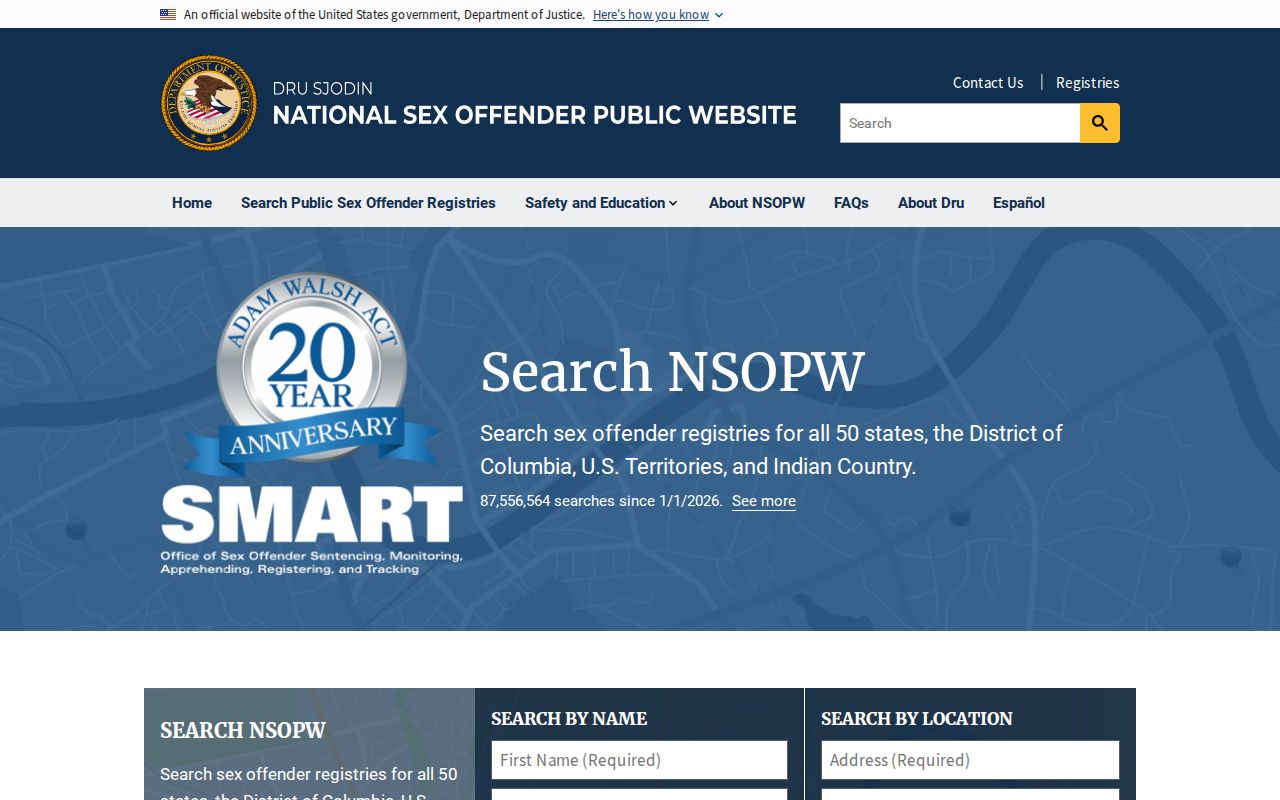
This widens coverage, while Linn County and MSHP remain contacts for Missouri facts.
Compare the photo, birth data, aliases, conviction jurisdiction, and registered location. If entries conflict, identify the source agency and ask that office to confirm its current data.
Community Notification and Lawful Use
Public registry access supports personal, family, and community safety awareness. It does not authorize harassment, threats, intimidation, or vigilantism. A listing also does not prove that a person presents a current or specific danger. Read the facts that the profile actually reports, use address or radius searches for practical awareness, and confirm apparent errors with the registering agency.
The MSHP registry information and disclaimer explains the state system’s limits and lawful-use warning.
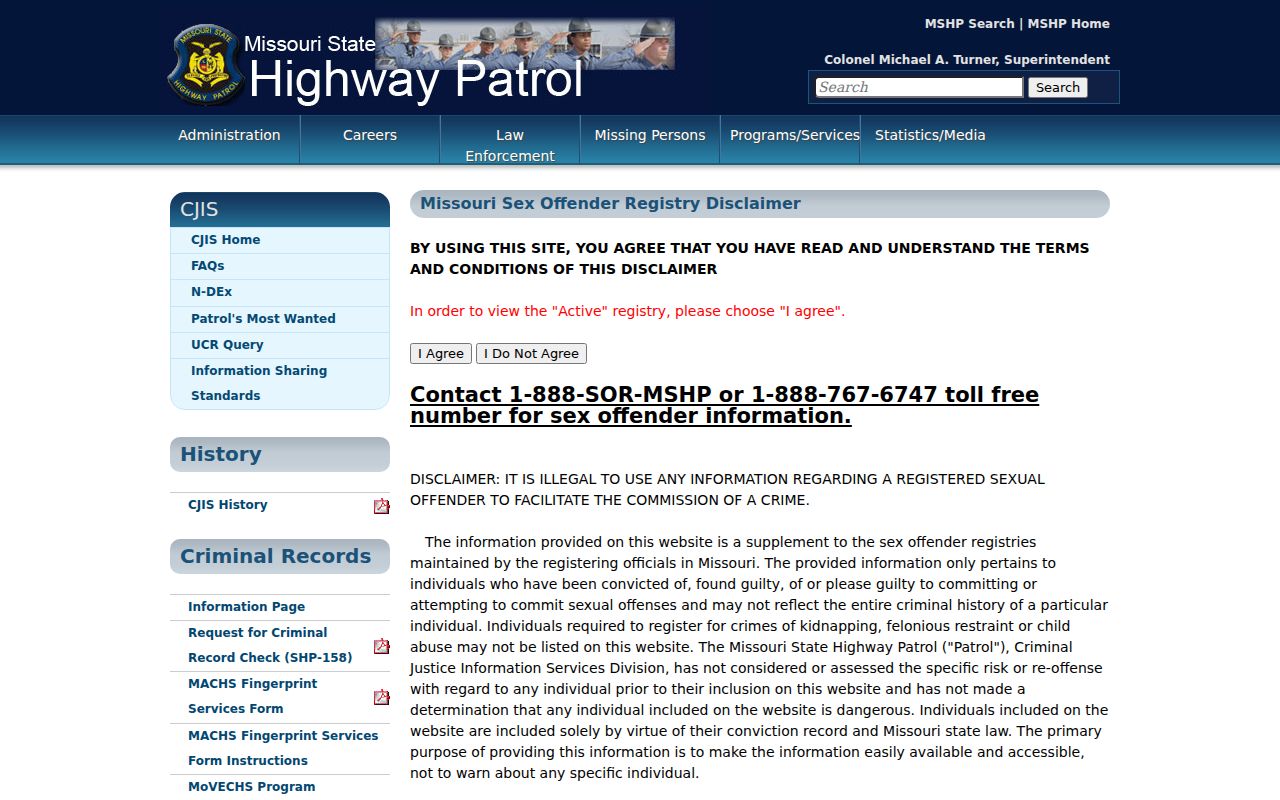
The warning shown by the state is part of the search process, not fine print to skip before viewing Linn County results.
Use registry information lawfully. MSHP states that using registry information to facilitate a crime is illegal. Harassment, threats, or vigilantism are forbidden; RSMo 589.425 separately makes failure to register a criminal offense.
Call 911 if there is an immediate threat. For a concern about Linn County registration compliance, use the sheriff’s non-emergency line. Questions about the Missouri registry can also go to MSHP at 1-888-SOR-MSHP, or 1-888-767-6747, and mosor@mshp.dps.mo.gov. Give the agency the profile or location details that led to the concern. Do not confront the registrant.
Report Linn County Registry Noncompliance
“Non-compliant” has a specific registry meaning. MSHP uses it when required information or an update has not been completed with the county chief law-enforcement official. It is not a broad label for conduct outside the registration process. A resident who sees a possible outdated Linn County address, missing update, or other registration issue should preserve the public profile link and contact the sheriff or MSHP.
State law places registration duties within RSMo 589.400 through RSMo 589.425. Report a concern with facts, not assumptions: the registered name, profile, address field, date observed, and the specific mismatch. The Linn County Sheriff can check local registration information, while MSHP can answer statewide system questions. This gives trained officials a clear lead without putting the searcher or another person at risk.
Note: A compliant status confirms required registration steps, but it does not serve as a promise of safety or a full criminal-history result.